Back-Office Modernization Becomes a Strategic Priority for Logistics Firms
- Emily Watson
- Jan 9
- 3 min read

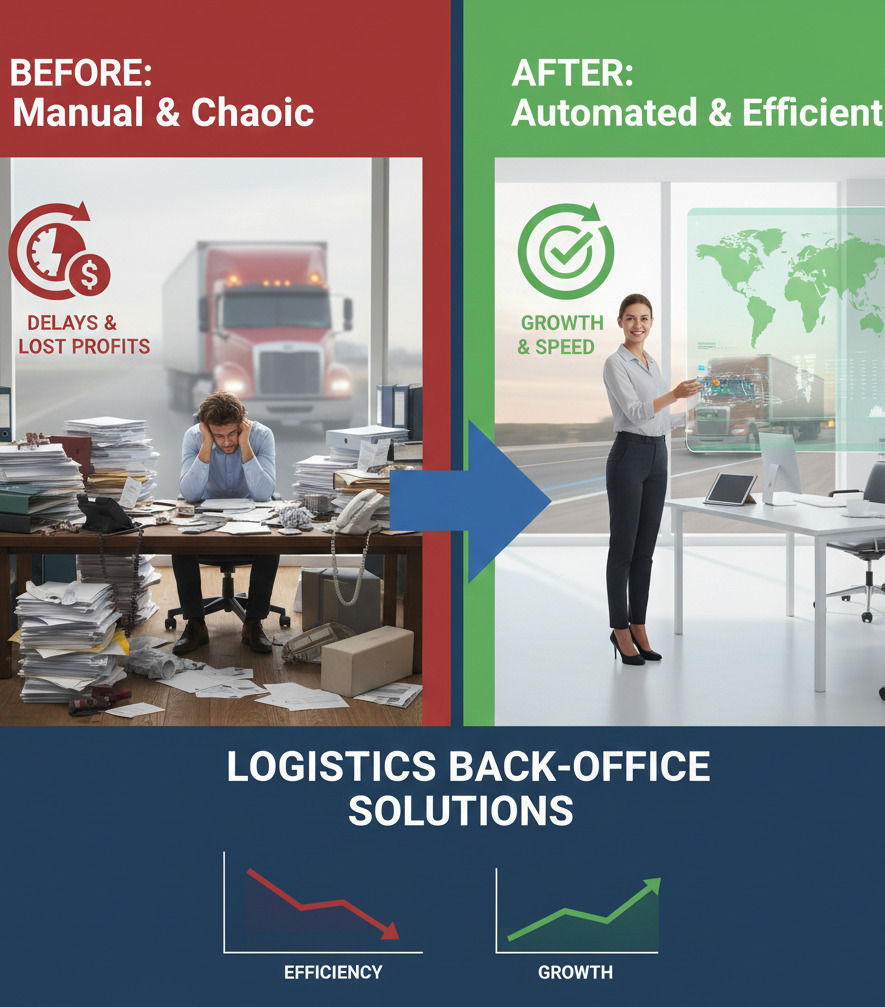
Managing the back-office in logistics means handling the administrative, billing, and documentation functions that support transportation, warehousing, and customer service. For years, these activities were performed through paper files, spreadsheets, and email communication, methods that were heavily manual and prone to errors. Today, modern technology such as Transportation Management Systems (TMS), cloud platforms, and AI-driven tools can automate many of these tasks. Choosing the right tools based on business size, complexity, and budget can greatly reduce cost, improve service performance, and support sustainable growth.
From Manual Processes to Integrated Systems
In many small and mid-sized logistics operations, the back office still depends on manual processes and fragmented tools. Paper documentation, disconnected spreadsheets, and phone or email updates remain common. These approaches may work temporarily, but they often lead to errors, delays, and inefficiencies. Research shows that nearly 88% of spreadsheets contain errors, and logistics teams spend about 22% of their time on manual data tasks.
These inefficiencies create ripple effects:
Billing cycles slow down
Days Sales Outstanding (DSO) increases
Customer disputes become more common
Cash flow becomes unpredictable
Modern back-office tools address these problems through automation and system integration. A TMS or cloud platform centralizes data so that invoices, orders, shipments, and compliance documents are automatically matched and processed within seconds, greatly reducing human workload and error rates.
Modern Technology Driving Back-Office Transformation
Today’s logistics back-office ecosystem includes:
Transportation Management Systems (TMS)
A TMS automates tasks such as rate shopping, carrier booking, document matching, and freight audit/payment. Around 70% of shippers rely on TMS platforms, while those who do not are typically smaller operations with less complex routing needs. Leading systems provide real-time visibility and analytics, helping companies optimize routing and cost.
Cloud Platforms
SaaS-based logistics software links inventory, orders, finance, and compliance into one environment. Through API integrations, activities such as proof-of-delivery updates can automatically trigger billing or customer notifications, eliminating manual handoffs.
AI & Automation Tools
AI and robotic process automation (RPA) are increasingly used for:
Reading bills of lading and customs forms
Matching invoices with shipment records
Flagging exceptions or missing data
Automating repetitive tasks
The result is faster processing, fewer errors, and a shift toward exception-based work rather than manual workflows.
Core Functions Managed by Back-Office Systems
Back-office solutions support essential logistics activities, including:
Billing & Invoicing: Automated freight billing reduces discrepancies and accelerates cash flow.
Order Processing: Digital inputs improve accuracy, minimize data entry, and enable real-time shipment tracking.
Documentation & Compliance: Digital document management improves customs clearance and regulatory consistency.
Data Management: Updated carrier, customer, and inventory records ensure accurate reporting.
Customer Communication: Automated alerts and status updates reduce manual follow-up and improve service transparency.
Reporting & Analytics: Performance dashboards, financial reports, and KPI visibility support better decision-making.
These functions form the administrative backbone of logistics. Even though they operate behind the scenes, they are essential for on-time delivery and operational reliability.
How to Choose the Right Back-Office Solution
Selecting the right system depends on several factors:
Size & Complexity:
Large enterprises may require full ERP or global TMS platforms; smaller firms may only need modular tools.
Key Requirements:
Organizations should identify pain points (e.g., invoicing errors, compliance delays) and prioritize solutions that address them.
Cost & ROI:
Cloud solutions lower upfront costs while subscription models spread expenses. Faster billing, fewer errors, and lower manual labor often deliver rapid ROI.
Scalability:
Software should support increased users, higher shipment volumes, and new lanes without major redesign.
Integration:
Systems must connect easily with accounting tools, WMS, ERP, or carrier portals to avoid duplicate work.
Vendor Support:
Implementation assistance, training, and customer support influence long-term success.
Some firms also adopt hybrid approaches, combining software with outsourced back-office teams for additional flexibility.
Business Impact: The Benefits of Modern Back-Office Solutions
When the right back-office solution is implemented, logistics companies see gains in:
Cost Reduction: Less manual labor and fewer billing errors minimize financial losses.
Operational Efficiency: Reconciliation and processing become faster and more accurate.
Customer Satisfaction: Fewer disputes and faster updates build trust and loyalty.
Data Visibility: Unified data improves forecasting, planning, and performance management.
Scalability: Companies grow without proportional staff increases or operational bottlenecks.
In effect, the back office shifts from being a “silent engine” of paperwork to a strategic advantage that supports customer performance, financial health, and long-term scalability.
Discover how optimized logistics back-office operations can improve efficiency, support scalability, and drive sustained business growth.


Comments